.
.
VIRGINIA BLUEBELLS ~ PLANTS & SEEDS FOR SALE
JANET L. WISSMANN, Soldiers Grove, WI Ph.608-624-5511 9am-9pmCentralTime EveryDay
PLANTS & BARE ROOTS: CALL TO PLACE AN ORDER or to ASK QUESTIONS.
SEEDS: SCROLL DOWN TO PURCHASE SEEDS.
VIRGINIA BLUEBELLS are Zone 3-9 perennial
spring ephemerals which grow larger and have more flower stems as the
plants get older. Older plants can have >20 stems! Their sky blue
color is absolutely gorgeous in early spring when yellow is everywhere!
They are native to the Eastern USA and are a great source of nectar for
early pollinators. They are only green from very early spring until
late spring, then they go dormant until the next spring. I'll include
an instruction sheet. They are easy to plant. You can plant them any
time your ground is not frozen.
VIRGINIA BLUEBELLS SEEDS & PLANTS FOR SALE ~ A NATIVE SPRING EPHEMERAL WILDFLOWER FOR EARLY POLLINATORS & HUMMINGBIRDS

SEEDS AND DORMANT ROOTS CAN BE SHIPPED. ACTIVELY-GROWING GREEN PLANTS ARE PICKUP ONLY (I CAN SHIP THEM AFTER THEY HAVE GONE DORMANT IN LATE SPRING. )
_____________________________________________________________________
PURCHASE VA BLUEBELL SEEDS:
200 seeds / $20.00 click this button to buy w/ Paypal :
500 seeds / $40.00 click this button to buy w/ Paypal :
To pay with a check, please
phone me; I'll verbally take your order and will set seeds
aside for you while you mail your check. ph. 608-624-5511 9am to 9pm
To pay with your credit card, phone me and I'll send you an invoice thru PayPal and they will securely manage your credit card payment (you don't need a PayPal account to do this). ph. 608-624-5511 9am to 9pm
______________________________________________________________________
for sale - seeds available each spring - Virginia Bluebell seeds for sale
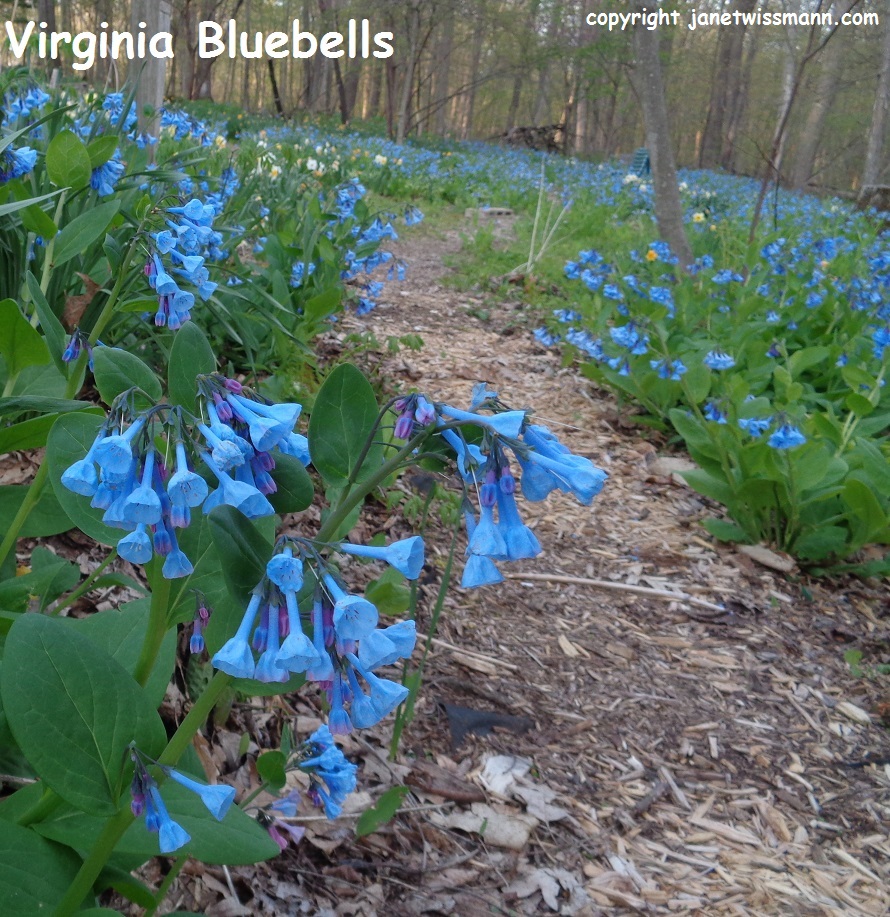
 ABOUT VIRGINIA BLUEBELLS: A LOVELY PIECE OF AZURE BLUE SKY
You won't find these native plant seeds in catalogs or in your local garden shop! Why? Read on.
I collect my seeds fresh from my plants here in Wisconsin each
spring and make them available, while they last, to gardeners who want
to grow these sky-blue beauties from seed. And believe me, to have
such lovely bits of azure-blue sky right there in your garden at a time
of year when yellow is everywhere--well, it doesn't get any better than
that! Virginia Bluebells are early-blooming "spring ephemerals". What
this means is that they are only green above ground for about 8 weeks,
starting right after the snow melts. After they bloom in spring, the
tops die back and they disappear until next year.
WHY YOU WON'T FIND VIRGINIA BLUEBELL SEEDS FOR SALE IN THE SUPERMARKET OR GARDEN CENTER: Seeds
of the beautiful, native perennial Va. Bluebell should be planted within a year of their being shed by the plant. They don't
survive long-term storage very well, plus they need to go through a long period of cold moist treatment (winter)
before they will sprout. After winter is over, they will sprout in early spring the following
year.
I collect my seeds in my woodland garden in SW Wisconsin. You'll
plant the seeds upon receipt, but they will not actually sprout until
the following spring after they have gone through their first winter in
the ground. They will reach flowering age/size in two to three years
(To get a faster start, you can buy bare roots from me of various ages) . Sure, Virginia Bluebells may take a few years to
reach blooming age from seed, but the wonderful thing is that they are
perennials, so they will come back each spring and bloom every year for
you. And if conditions are right, they will reproduce for you, too!
.JPG)
Virginia Bluebells are native spring ephemerals, which means they are plants that come up early in spring and then 'die back' by summer. The root stays alive but the greenery disappears. Great for in between hostas in the shade garden, or at the edge of woods, or near a favorite tree! Even though the green above-ground part of the plant dies back and disappears, the perennial root remains and will come up again year after year, getting larger and bearing more flowering stems. US Zone 3-8. Easily grown in average, medium, well-drained soils in part shade to full shade. Prefers moist, rich soils.
As you can see from reading through this page, they take a few years to get established from seed, but they are definitely worth it! If you want a head start on getting blooms, you can buy my plant roots. I usually have several ages/sizes of roots available and can ship them when the plants are not actively growing. Local pickup is also possible; phone with questions or to make an appointment.
Detailed planting and propagation instructions will be provided when you buy seeds from me.

SEEDS
To order seeds, please phone me or use paypal buttons below. I'll
include a detailed instruction sheet on how to grow these.
_____________________________________________________________________
PURCHASE VA BLUEBELL SEEDS (free shipping):
To pay by check, please
phone me; I'll verbally take your order and will set seeds
aside for you while you mail your check. ph. 608-624-5511 9am to 9pm
To pay with credit card,
phone me and I'll send you an invoice thru PayPal and they will
securely manage your credit card payment (you don't need a PayPal
account to do this). ph. 608-624-5511 9am to 9pm
To pay with Paypal, use these buttons:
200 seeds / $20.00 click this button to buy w/ Paypal :
500 seeds / $40.00 click this button to buy w/ Paypal :
_____________________________________________________________________
MORE VIRGINIA BLUEBELL PICTURES: For most of the photos below, you can click to enlarge.


.JPG)
.JPG)
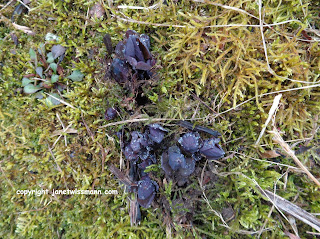

Photo below shows Va.Bluebell roots at various ages. They don't start
blooming until they are 3 or 4 years old and they get more flowering
stems as they get older.
Celandine Poppy - seeds for sale - Call to order Celandine Poppy seeds between April and June each year.
.
_____________________________________________________________________
PURCHASE VA BLUEBELL SEEDS (free shipping):
To pay by check, please
phone me; I'll verbally take your order and will set seeds
aside for you while you mail your check. ph. 608-624-5511 9am to 9pm
To pay with credit card,
phone me and I'll send you an invoice thru PayPal and they will
securely manage your credit card payment (you don't need a PayPal
account to do this). ph. 608-624-5511 9am to 9pm
To pay with Paypal, use these buttons:
200 seeds / $20.00 click this button to buy w/ Paypal :
500 seeds / $40.00 click this button to buy w/ Paypal :
______________________________________________________________________
for sale - seeds available each spring - Virginia Bluebell seeds for sale
______________________________________
CELANDINE POPPY SEEDS FOR SALE IN LATE SPRING - Stylophorum diphyllum - perennial - These bloom at the same time as Va. Bluebells; when paired together the display is stunning. And just like Va. Bluebells, these seeds cannot be allowed to dry out and need to be planted right away. As soon as the seeds are shed by the parent plants, I will pack them in moist potting soil and mail them to you. They are usually ready around late May or early June, so call me to place your order anytime before then.
Delicate and rare, clear yellow celandine poppies have uniquely-shaped glaucous (bluish) leaves.
 The Celandine poppy is a native plant and is a great shade garden plant. It is a long-lived perennial which will re-seed and make more plants for you over time. Mature plants are 12-18 inches tall and 12-16" wide. They are lovely when planted under trees with the sky-blue Virginia Bluebell because they bloom at the same time.
Like the Virginia Bluebell, you won't find Celandine Poppy seeds for sale in garden centers or grocery stores, because the seeds of Celandine poppies must be kept moist and must be planted right away. So they will not survive if they are dried and placed in those seed packets you see for sale on racks in stores. And individual potted plants in garden centers will be $10 each or more --if you can find them. One reason you don't find them for sale very often is that they don't transplant well..JPG)
Like the Va. Bluebell, Celandine Poppy seeds won't germinate until the following spring, and will not flower that first year, but most woodland and native-plant gardeners are very aware that patience is a virtue! These are long-lived plants and will flower every year once they are mature.
The seeds I'm offering for sale are from my own plants which bloom around April where I live in SW Wisconsin... my seeds are usually ready in June. I will pack your seeds with moisture, and will mail your seeds to you as soon as they are shed by the plant. You will need to plant them ASAP so they don't get moldy.
 HOW TO
ORDER SEEDS:
Please phone me between March 1 - June 30 in any given year, and you can pay with PayPal or send a check. Once you pay, I will mail the seeds to you as soon as they are shed by the plant. You will receive 200+ seeds, plus growing instructions, for $20 ppd.
Please phone Janet to purchase Celandine Poppy seeds: 608-624-5511 (CST)
Note that this offer is only good for a limited time in the spring when the seeds are ready; I do not store seeds here longterm.
__________________________________________________
CARDINAL FLOWER SEEDS FOR SALE - Lobelia cardinalis

.JPG) Cardinal flowers are absolute knockouts in the garden or the landscape! The eye-popping red is unlike any other; the intensity is bound to catch not only your eye but also that of hummingbirds, who will set up a territory and fiercely defend their plants!
Cardinal flowers are absolute knockouts in the garden or the landscape! The eye-popping red is unlike any other; the intensity is bound to catch not only your eye but also that of hummingbirds, who will set up a territory and fiercely defend their plants!
Cardinal flowers grow easily from seed if you have the right conditions. They enjoy moist soils, and will even tolerate very wet soils that temporarily flood. You will notice them self-sowing in wet and moist areas. If you have drier soils, don't dismay, because you can very easily start plants in flats or pots and then later transplant them into your garden where they will grow very nicely for years to come.
Cardinal flower seeds need to overwinter before they will sprout; seeds that are planted one year will sprout the following summer, and bloom the summer after that. Now you see why cardinal flowers are so rarely found in commercial greenhouses!
Plant the tiny seeds on damp, open ground in late spring or summer, or in pots. Do not cover seeds with soil; simply loosen the soil, then tamp down after sprinkling the seeds. You may want to clip weeds down to the ground that first year as the tiny plants are getting started. Another way to plant your seeds so that weeds won't be such a problem: spread a layer of newspaper and then a one- or two-inch layer of weed-free potting soil on top of your exisiting soil--and THEN sprinkle the seeds on that.
Keep area constantly moist. Seedlings are very tiny at first. If weeds are kept at bay, each cardinal flower seedling will become a 6-inch diameter rosette by late fall. Will bloom the next year and all years thereafter.
Biennial or perennial? Cardinal flowers are technically not perennials. The flowering stem and the roots associated with that stem die after setting seed. But the plant is in effect perennial as long as the lowermost leaves are allowed to grow new offsets from their axils. Click photos to enlarge.

 To facilitate this process and to keep your cardinal flower blooming year after year, keep them free of debris and competition so they will establish those new roots before winter. The low rosettes remain fairly green throughout the winter, ready to sprout their new stems in the spring. They will bloom in July and August, depending where you live.
A group of blooming cardinal flowers looks brilliant when planted in front of a dark background such as evergreens. Cardinal flowers prefer light shade, part to full sun. Zone 3-9. Blooms in late summer and early fall, for 3-4 weeks. 2 to 4 feet. These seeds are tiny, but if you plant them with just a little care, they will deliver a tremendous red glow to your garden or yard for many, many years!
HOW TO ORDER SEEDS:
For Cardinal Flower seeds, please phone any time of the year, and I'll send you a paypal invoice that you can use your credit card to pay. Or you can send a check (payable to Janet Wissmann). WI sales tax and postage are included.
ph. 608-624-5511 Central Time Zone
___500 seeds (approx.) / $20.00 ppd
Horticulture of Cardinal Flower, Lobelia cardinalis
____________________________________________________
LARGE-FLOWERED BELLWORT, or MERRYBELLS - SEEDS FOR SALE

 Large-flowered Bellwort, aka Merrybells,
Uvularia grandiflora - The closeup of the flower shows how Large-flowered Bellwort has a gently drooping appearance, especially early in the season. Large-flowered bellwort is in the lily family. They bloom at the same time as Virginia Bluebells and so make a great companion plant, as their soft yellow and light green leaves nicely complement the sky blue of bluebells. Unlike bluebells, the plants will stay green and fairly bushy throughout the summer, and so they will fill in where the bluebells have died back. They are an excellent native shade plant for woodland gardens, shaded borders, and wildflower gardens. Their pollen and nectar are utitilized by native Mason Bees and Bumblebees. These plants take three to four years to reach mature flowering size from seed, but the wait is worth it!
Merrybells are good plants for the woodland garden because the foliage stays nice and green throughout the summer months.


The leaves tend to begin as a lighter green, then eventually go darker as the summer progresses.

These photos at left show the perfoliate nature of the leaves quite well. You can also see the ripening seed pod . Click pictures to enlarge.
After you receive your seeds, plant them as soon as possible. They will sprout the following spring after having been in the ground during the winter. The baby plant will look like a miniature bellwort, only about 1 or two inches high with one to three leaves by the end of the first summer. They will achieve full size in three or four years, and each plant will eventually become as wide as a foot across, with many stems. Like many native woodland species, Bellwort takes a long time to reach a mature stage, but it is definitely worth the wait!
Uvularia seeds should be planted as soon as possible after they are shed by the plant; they cannot be allowed to dry out. I collect my seeds from my extensive woodland garden, and then immediately pack them in moist material and mail them to you. Seeds will need to overwinter outdoors in your garden or prepared nursery bed*** before they will sprout. Please call in April or early May to purchase seed; it is available only at certain times of the year.
50 Uvularia grandiflora Seeds $20 ppd
Please
call to order. Please call as early in spring as you can, so I will be sure to collect seed for you when they are ready. You can then pay with your credit card thru PayPal. Or you can send a check.
Uvularia canadensis seeds for sale. The common name is Large-flowered Bellwort, or Merrybells. 50 seeds $20.00 postpaid.Large-flowered Bellwort, Merrybells seeds for sale.
50 seeds $20.00 postpaid. www.thegreenpostbus.blogspot.com
Also available: Virginia Bluebell, Mertensia virginica, seeds for sale
_______________________________________
PAGODA DOGWOOD SEEDS/BERRIES FOR SALE
 Cornus alternifolia
 - Phone anytime before mid-July of each year to pre-order seeds. As soon as the seeds are ready, I will collect them and mail them to you immediately. This is usually in July.
100+ seeds/berries for $20 ppd. (I am usually generous in that I include
more than I promise.)
 THE SHAPE OF PAGODA DOGWOODS IS EXCEPTIONAL!
 Their branches grow in distinct layers, like a pagoda. Native to eastern North America, these are one of the few dogwoods that are hardy to zone 4. They are lovely small, fast-growing understory trees that like some part shade and moister soils. If planted in full sun, it is recommended that they be watered frequently in summer. For more information on these special, native dogwoods, Wikipedia
article is good; they don't show a full pic of the tree but is accurate
on most of what I have experienced with these dogwoods. Mine are wild
type, white flowers.
FANTASTIC
food for birds in early summer (have counted 12 species of birds including woodpeckers, kingbirds, and vireos coming to the trees to eat the berries). And of course the architectural shape of
the tree is beautiful.
Generally need moist soil, partial to full shade. They are naturally an understory tree, up to around 15' tall, not very deep roots so could be next to a foundation if that location gets enough rain. The trees take about 8-10 years to reach a good size.

In some locations they tend to be multi-stemmed, but you can sometimes coax just one trunk by cutting down the others. Like all dogwoods eventually the main stem will falter at about age 10-15, but the root system will send up other shoots to take the place of the failing one, so the tree itself is long-lived (I have 30-year old specimens, some on their third time around with a new main trunk.) These pictures are from
Wikipedia.
The berries from the mature trees are enjoyed by many species of birds including woodpeckers, robins, and vireos.
**************************************************
Woodland Phlox Phlox divaricata
________________________________________
WOODLAND PHLOX - SEEDS FOR SALE
also known as Wild Blue Phlox
.JPG)
.JPG)
Woodland Phlox Seeds - Please read below
Sales tax and postage are included in seed price.
.JPG) IF YOU WANT SEEDS, CALL ME BEFORE MID-MAY IN A GIVEN YEAR SO I CAN BE SURE TO COLLECT SOME FOR YOU. SEE BELOW.
IF YOU WANT SEEDS, CALL ME BEFORE MID-MAY IN A GIVEN YEAR SO I CAN BE SURE TO COLLECT SOME FOR YOU. SEE BELOW.
Beautiful
Woodland Phlox, or
Wild Blue Phlox,
Phlox divaricata, is a species that is found in the eastern and midwestern United States, living in meadows, at the edge of woods, along roadsides and in the interior of light woods. The scent of Woodland Phlox is beautiful. Over the course of a year or two Wild Blue Phlox forms pleasing mats of color which bloom in May and June. Woodland Phlox do extremely well in rocky scree gardens, on rocky slopes, in sandy soils, and in gravel driveways. They prefer light shade, as they are considered a woodland species, but they can tolerate a good amount of morning or late afternoon sun. This is a carefree perennial which will self-seed and, given time, provide you with May color in surprising places!


Here are two photos showing seedlings of wild blue phlox. Click pictures to enlarge.
The picture below shows a healthy clump of wild phlox, growing in the gravel at the edge of a driveway.
.JPG)
.JPG)
Wild blue phlox will form pleasing mosaics of color that meander within your other plantings. The grouping shown at left runs along a driveway at the edge of woods. After flowering and setting seeds, the plants are then clipped with a weedwhacker to a height of about 5" for the remainder of the summer. This helps keep other tall weeds down.
Over the years they come and go from places, setting seed but never becoming invasive. They in general seem to do best on disturbed ground or roadsides or edges or cleared areas where other competing plants are not well-established. Think of them as the pioneers of new ground. Like a lot of plants they do not re-seed well if you have very heavy leaf cover, so do expect to rake a little in the fall if you plant them under thick deciduous forest.
I started out with three plants, and you can see what it's like ten years on (picture at left). They are not invasive however, so don't be worried about that. And ten years later, they have moved to more places, showing up at edges of wood-chip paths and under hostas and the edge of borders.
I collect seed from my extensive gardens, and offer it for sale during late spring each year. Please call me to purchase seed; you can then send a check or if the seeds are ready right away I'll direct you to pay with your credit card thru PayPal so that I can mail your seeds immediately... time is of the essence with many spring wildflower seeds because they cannot be allowed to dry out.
_______________________________________________________
Janet Wissmann
Soldiers Grove, Southwestern Wisconsin between Prairie duChien and LaCrosse
150 Woodland Phlox Seeds
$20 postpaid Please call to order these seeds by Mid-May. I won't be collecting
seed unless someone has ordered some by then. The seeds need to be sown when fresh and if there hasn't been any interest, I don't bother collecting any.
phone 608-624-5511 9am-9pm CST - check or credit card thru Paypal is accepted
Sales tax and postage are included in seed price.
______________________________________________________
____________________________________________________
If you like wildflowers you might be interested in these wolf prints, which feature my paintings of 8-wk old wolf cubs and various native wildflowers such as wild geranium, trillium, and mayapples:
SET OF FOUR CUB LTD. ED. PRINTS


Click on pictures to enlarge. Image size of each print is 10x12". Signed and numbered by the artist Janet Wissmann; when you buy the set of four, all the prints will have matching numbers!
WOLF CUB / WILDFLOWER PRINTS - SET OF FOUR: $100 plus $12 S/H
Please phone to purchase this SET OF 4 wolf cub prints Janet Wissmann ph.608-624-5511. I accept checks and V/MC(via PayPal). Or use BUYNOW button on my wolf page
HERE>>>
BACK TO TOP OF PAGE »
_________________________________________________________________
An excellent book for native eastern wildflowers is
Wildflowers: A Guide to Growing and Propagating Native Flowers of North America (The New England Wild Flower Society) by William Cullina.
_________________________________________________________________
DAFFODIL
BULBS FROM MY GARDEN sales are finished for the season as of Dec.
2023. I'll probably dig/divide more in 2024. If there are varieties
that you want it would be helpful if you would call me in April 2024 so I
can mark them while they are still blooming. Pics of my varieties are
shown below.
.
. Janet Wissmann ph. 608-624-5511
~ All bulbs are washed and dried. Daffodils are deer/rabbit/squirrel resistant and are extremely easy to grow.
~ FREE
LOCAL PICKUP (I am located near Soldiers Grove and Rolling
Ground) -
Please call me if you would like to make an appointment to choose & buy in
person. Cash is preferred. PayPal (or credit card via PayPal) is
possible if you wish to pre-pay for your bulbs before pickup. Also, FREE DELIVERY TO VIROQUA w/ payment in advance, or C.O.D.
~ IF YOU HAVE COME HERE FROM Eb^y: I'll give a 10% discount off myEb^ y daffodil prices if you'll buy directly from me instead. If you want to see what daffodils I have up on eb^ y, phone me and I'll direct you on how to find my items there.
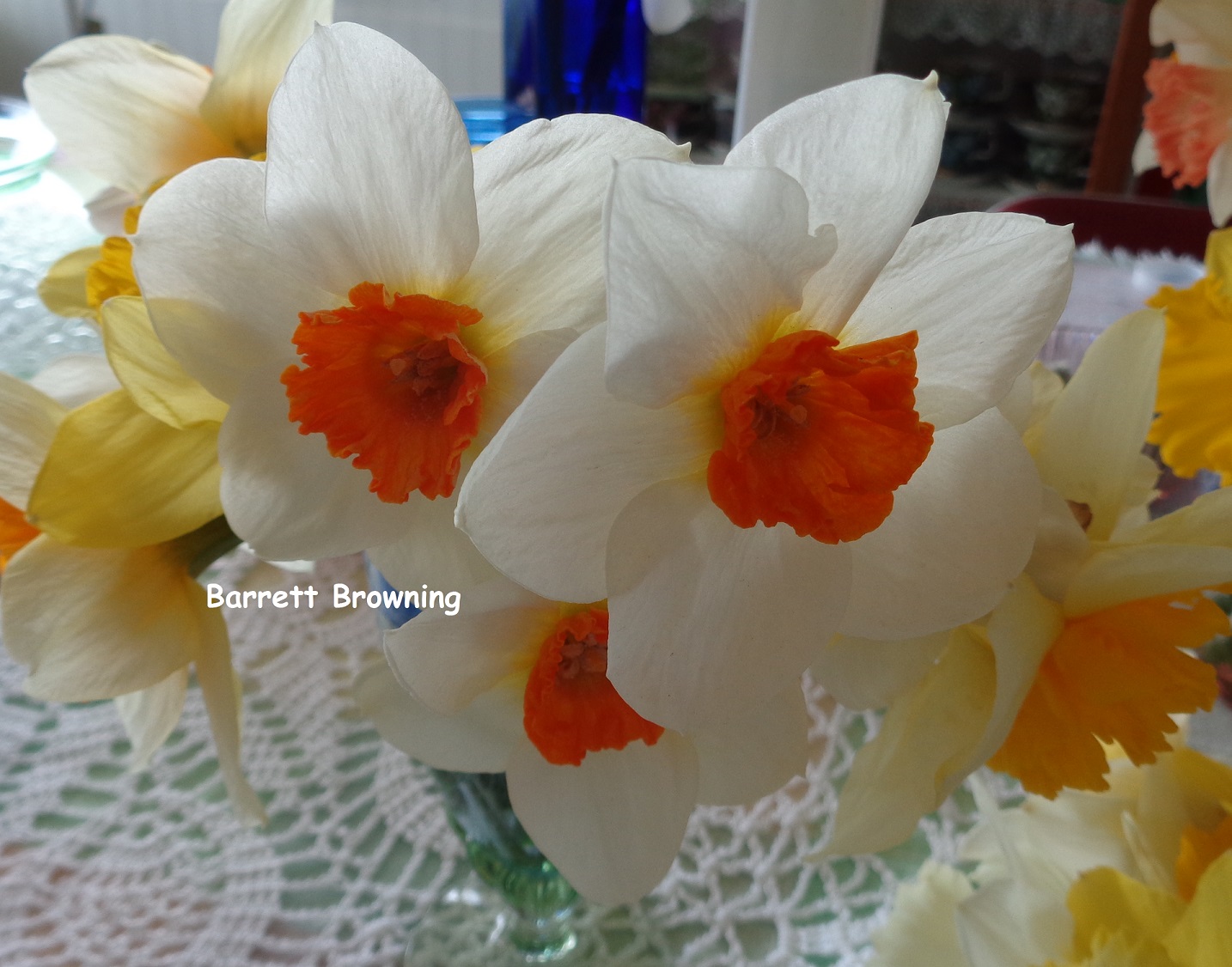
Here are pictures & names of most of my daffodil varieties:
------------------------------------------------------------------
3 PREMIUM VARIETIES ARE
SHOWN BELOW (more expensive)


..
_________________________________________
also
available in some years: Lycoris squamigera, also known as Autumn
Lycoris, Pink Surprise Lily, Magic Lily, Naked Ladies, Resurrection
Lily. Deer/rabbit/squirrel resistant.
Lycoris SOLD OUT FOR 2023
click pics to enlarge:
____________________________________________________
NOTE: THESE POPPIES BELOW ARE NOT IN STOCK... I AM KEEPING THESE PICS HERE IN CASE I AGAIN HAVE SEEDS TO SHARE IN THE FUTURE.
Rare Fuzzy Pink Poppy Seeds

These
beautiful, frilly pink annual poppies are easy to grow! Blooming in
late June or July, Fuzzy Pink Poppies will reseed themselves each year
for a lifetime of garden color. Their clear warm pink is always
perfect, especially when paired with light blue delphiniums or a light
yellow lily. Fuzzy Pink Poppies do well in all sorts of soils including
gravelly soils. Part or full sun. You will receive approximately 100
seeds (probably more; I am generous). You may order these at any time of
the year. These seeds are available for sale throughout the year. $5.00
ppd. Please call to order seeds.


Plant
Fuzzy Pink Poppy seeds at any time of the year. They will sprout early
the following spring. Poppy plants generally do not like to be moved,
so sprinkle the seeds in the location you want them to grow and lightly
scratch them into the soil.
 HOW TO ORDER SEEDS:
For Fuzzy Pink Poppy seeds, please phone any time of the year,
and you can pay with your credit card thru
Paypal. Or you can send a check (payable to Janet
Wissmann). WI sales tax and postage are included.
ph. 608-624-5511 Central Time Zone
____ 100 seeds / $5.00 ppd
_______________________________________________________________




.JPG)
%20%20%20.jpg)





.JPG)


.JPG)



%20-%20Copy.JPG)


.jpg)

.JPG)


